Flute Basic


75+
Clinics
15+
Years Experience
100+
Audiologists
Get Free Quotes
Features and Specifications:
Test types
Tympanometry, Acoustic Reflex, Reflex Decay, Quick test options, Acoustic Reflex Latency Test (ARLT), ETF (Intact and Perforated), Special tests (Growht-DLI and Non acoustic).
User interface
Multilingual
PRINTER
Built-in fast thermal printer with paper width:112 mm supplied as standard part
Reports
Printed on thermal printer
Pdf report create directly from the device and stored on USB Pen drive with possibility to add patient data and tests comments via the USB Keyboard (optional)
Data transfer to PC using Resonance Management Data Suite
Data transfer TO PC
Via cable trough USB port
Communication port
Nr.1 USB host type A
Nr.1 USB slave type B
Windows ® compatible software
Resonance MDS Management Data Suite
PROBE TONE
226 Hz for traditional Y-curve tympanometry (R26M, R26M-ME and R36M)
226 Hz for traditional Y-curve tympanometry (R26M-PT and R36M-PT)
678, 800 and 1000 Hz for traditional Y-curve tympanometry with added “B” and “G” curve (all –PT versions)
Intensity
226 Hz: 85dB SPL ± 2dB
678, 800 and 1000 Hz: 75dB SPL ± 2dB
Frequency Accuracy: ± 0, 5%
Harmonic distortion: Less then 1%
ADMITTANCE MEASUREMENTS
226 Hz: 0 to +5ml
Sensitivity scale: Auto Scales to appropriate range, available scales 1.5, 2 and 5ml
678, 800 and 1000 Hz: 0 to +25 mmho
Sensitivity scale: Auto Scales to appropriate range, available scales 5, 10, 15, 20, 25 mmho
Air pressure
Control: Automatic (R26M) Automatic and Manual (R36M)
Range: from +400 up to -600 daPa (R36M) from +200 up to -400 daPa (R26M) both adjustable in 50 daPa steps
Pressure accuracy: +/- 10 daPa or +/- 10%
Sweep rate: 50, 100, 200, 300 daPa/sec and automatic
Indicator: Measured value is displayed on the graphical display
Safety limitations: -800 up to +600 daPa
Compliance range: from 0, 1 up to 5 ml
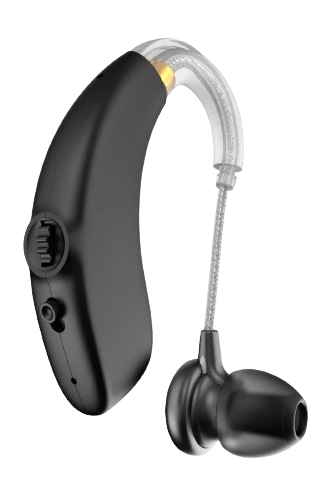
Hear the World Around You
At Clear Sound, we bring change in the way you approach wellness and care.
Frequently Asked Questions
The major hearing styles are IIC, CIC, ITC, ITE, BTE, RIC. All of them are in wired and wireless options. Now a days there is also option of hearing aids with Rechargeable batteries.
The cost of a hearing aid or aids really depends on the type of device required as well as added features and necessary professional services. Because everyone’s hearing problem is different, the price range varies from person to person and their choices.
If you have hearing loss in both ears the answer is YES! Research shows if someone with hearing loss in both ears only wears one hearing aid, their unaided ear is at great risk for increased and sometimes rapid auditory deprivation.
Hearing aids typically last about 5-6 years. We say this because of the tremendous advancements in technology. Hearing aids can last longer as long as they are properly taken care of and still appropriate for your lifestyle needs.